Short answer: A toilet that keeps running has one of two faults. If water trickles into the pan, the flush valve seal is worn. If water runs out of the overflow or the cistern keeps filling, the fill valve is not shutting off. Both are common, inexpensive parts. Turn off the isolation valve until it is fixed if water is escaping.
A toilet that never quite stops running is easy to ignore. In a Rutherglen tenement it should not be ignored for long. A cistern that overflows at the wrong moment, or a pan connector that weeps while the toilet is constantly cycling, can soak the floorboards and show up in the ceiling of the flat below. The fault itself is nearly always simple.
Two faults, two fixes
Lift the cistern lid. Watch what happens after a flush and again a few minutes later.
| What you see | Fault | Fix |
|---|---|---|
| Water trickles into the pan, visible as ripples at the back of the bowl | Flush valve seal worn or dirty | Clean or replace the seal, or replace the flush valve |
| Water level rises above the overflow line and runs into the overflow | Fill valve not shutting off | Adjust the float, clean or replace the fill valve |
| Cistern refills briefly every so often with no flush | Slow leak past the flush valve | Replace the flush valve seal |
| Toilet runs after flushing and the button sticks | Button or cable mechanism | Free or replace the button assembly |
A simple check: put a few drops of food colouring in the cistern and do not flush. If colour appears in the pan after twenty minutes or so, the flush valve is leaking.
The flush valve
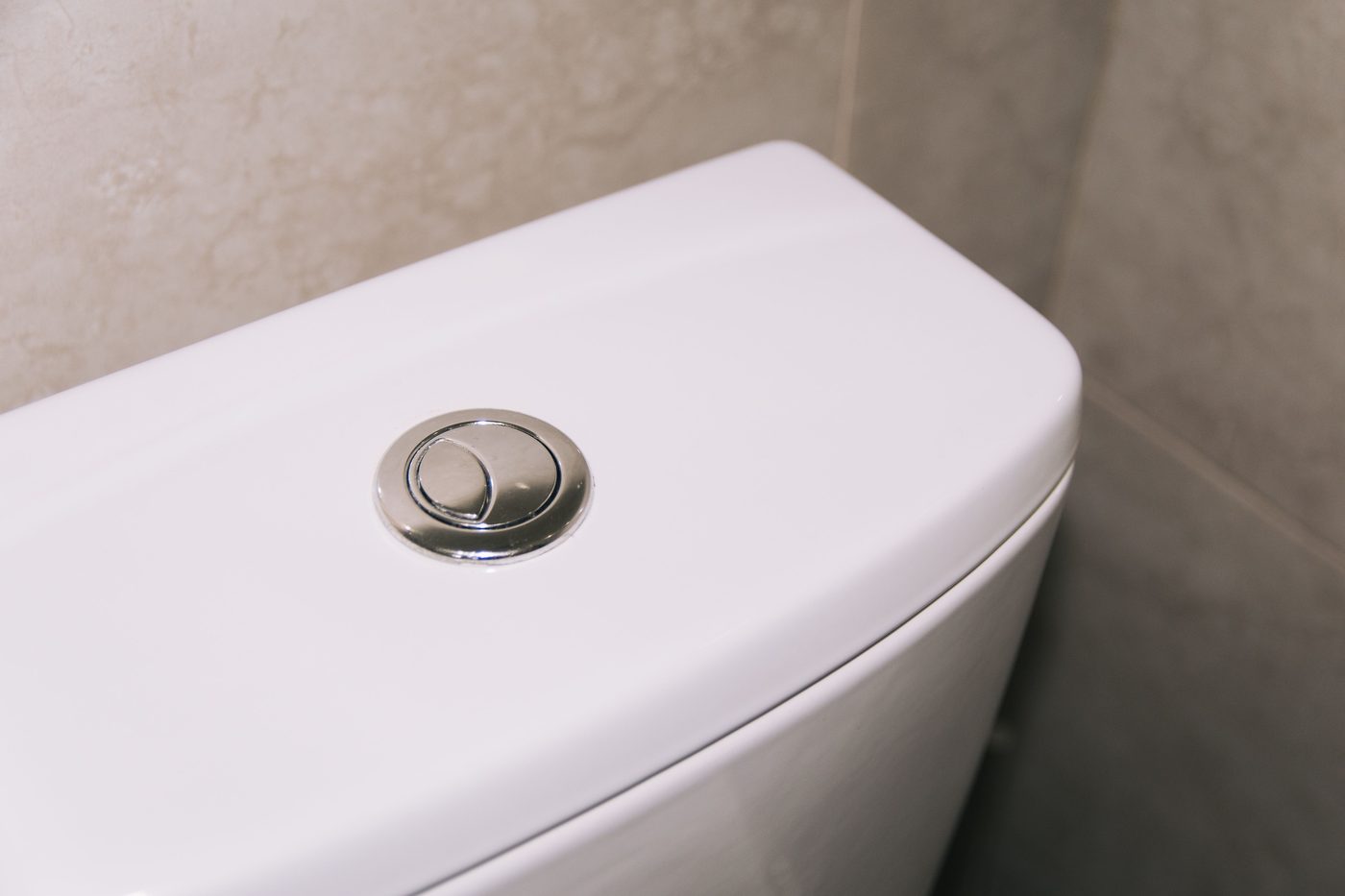
Most modern toilets in Glasgow homes have a push button cistern with a drop valve. When you press the button, the valve lifts and water rushes into the pan. When it drops back, a rubber seal closes the gap. That seal wears, warps or picks up grit, and water starts to trickle past it.
Glasgow’s water is soft. Scottish Water’s 2024 hardness data shows the zones around Glasgow as soft, so scale building up on the seal is unusual here. Wear and grit are the usual reasons. Sometimes cleaning the seal and the seat it sits on is enough. Often the seal or the whole valve needs replacing.
Older toilets with a lever handle may have a siphon instead. Those do not usually leak into the pan in the same way, but the diaphragm inside wears and the toilet stops flushing properly.
The fill valve
The fill valve lets water in and shuts off when the float rises. If the float is set too high, or the valve does not seal, water keeps coming and goes out through the overflow. In most modern cisterns the overflow runs inside into the pan, so it looks like a trickle into the bowl. In some older tenements you may still find an overflow pipe through the wall that drips into the back court.
First, try lowering the float so the water stops about 2 cm below the overflow. If it still runs, the valve washer or diaphragm is worn, or grit from the supply is holding it open. Grit can get into the supply after work on a nearby main.
Why it matters more in a tenement
Rutherglen has streets of red sandstone tenements around Main Street, where bathrooms sit above each other. A toilet that runs constantly is not a leak by itself, but it keeps the system busy, and any weak joint in the pan connector or the cistern seal is under more strain. If the toilet does overflow onto the floor, the timber floor and lath and plaster ceiling below take the water.
Under the Tenements (Scotland) Act 2004, a pipe or fitting that wholly serves one flat belongs to that flat. A running toilet is the owner’s job, and so is any damage it causes below.
Isolation valves
Many older flats have no isolation valve on the toilet supply. That means turning off the whole flat to fix it, and sometimes the whole close. A small isolation valve on the pipe to the cistern lets you stop the water to the toilet with a screwdriver. If you do not have one, we fit one as part of the repair. Our guide to finding the stop tap in a tenement flat helps in the meantime.
When to call a plumber
Call us if:
- the toilet is close coupled and the flush valve needs replacing, as that usually means separating the cistern from the pan
- the cistern is concealed behind a panel
- the toilet is leaking onto the floor as well as running
- you cannot isolate the water
We identify the make, carry common valves and order specific parts where needed. Our toilet and tap repairs page covers what a visit involves, and our Rutherglen and Cambuslang page explains the homes common there.
Concealed cisterns
Many newer bathrooms in Rutherglen and Cambuslang, especially in new build homes near the Clyde Gateway, have concealed cisterns behind a panel with a flush plate on the wall. The valves are reached by taking off the flush plate and working through the opening. It is fiddly but usually possible without removing tiles. If the panel has been tiled over with no access, that makes any repair harder, so we always leave a way in when we fit one.
For landlords
The Repairing Standard requires a working toilet in privately rented homes, according to mygov.scot. A running toilet is a small repair, but leaving it can lead to a flood or a complaint, so it is worth fixing promptly.
Quick questions
Is a running toilet wasting much water?
It can waste a lot over a day because it never stops. It also keeps the fill valve working constantly, which wears it faster.
Can I fix a running toilet myself?
Adjusting a float or cleaning a valve is a reasonable DIY job. Replacing a flush valve on a close coupled toilet often means separating the cistern from the pan, which is easier with experience.
Why does my toilet run for a few seconds every now and then?
That is usually a slow leak past the flush valve seal. The level drops, the fill valve tops it up, and the cycle repeats.
Where does the overflow go?
Most modern cisterns overflow internally into the pan. Older ones may have an overflow pipe through the wall that drips outside.
Last updated 23 October 2026. Written for homes in Glasgow. Rules can change, so check the linked sources for the latest position.